
Private Houses and Hidden Violence
The CageThe novel places violent captivity, stalking, and fear inside ordinary homes, turning domestic space from a refuge into a contested site of safety.
increasing Bearing strength in each event
 decreasing
Bearing strength in each eventdecreasingEve's Doorway Ritual
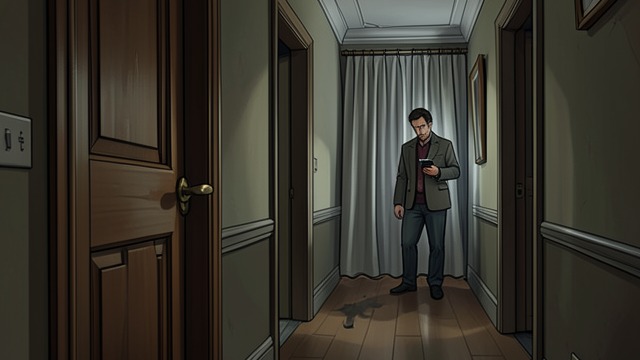
Home Is Not Automatically Safe
Listening Before Entry
Eve enters her house cautiously, pauses to listen, and checks that no one is inside before settling down. After her own abduction, silence and ordinary house noises no longer guarantee comfort.
She keeps her keys and phone close and draws curtains so she can feel private. These habits reveal a survivor trying to make home feel controlled again.
Security and Memory
Eve’s precautions are practical, but they also show how violence has traveled beyond the place where it occurred. The threat persists in her attention to doors, windows, and unseen rooms.
A Stranger in Zoe's Garden
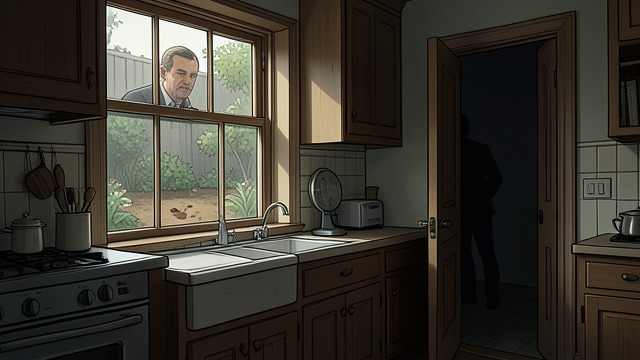
The Window Becomes a Boundary
An Intrusion From Outside
Zoe sees a man watching her through the kitchen window and shouts that she will call the police. He runs, but the incident has already disturbed the sense that her home is private.
She reports the intrusion, and an officer finds a footprint in the garden. The evidence establishes that someone has crossed into the space around her home without permission.
A Threat Grows Closer
Ken’s observation of the house prepares him to return under a plausible pretext. The window, intended to admit light while keeping weather outside, becomes a point of exposure.
An Empty Home and a Missing Woman
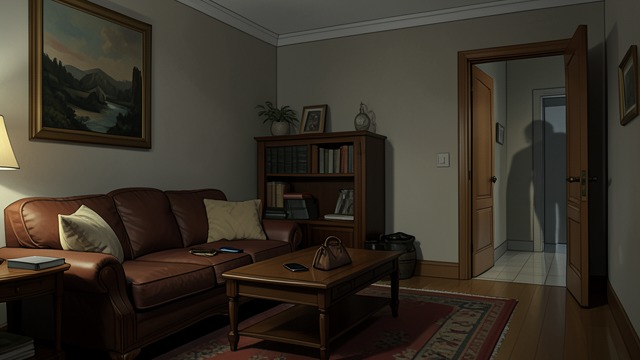
The House After Abduction
A Friend Finds the Signs
Sally Priestley enters Zoe’s house with a key and cannot find her. The furniture is in place, but Zoe’s handbag and ringing phone are tucked beside the sofa, suggesting that she did not leave for an ordinary outing.
Sally calls Zoe’s family and then the police. The domestic details that might usually reassure her—made bed, familiar rooms—only sharpen the sense that Zoe vanished suddenly.
A Home Becomes Evidence
Officers search the house and collect objects, while the absence of a clear disturbance complicates the account. The setting is both the place Zoe was taken from and an important source of clues.
The Captor's House Revealed
An Ordinary Exterior
Hidden Architecture
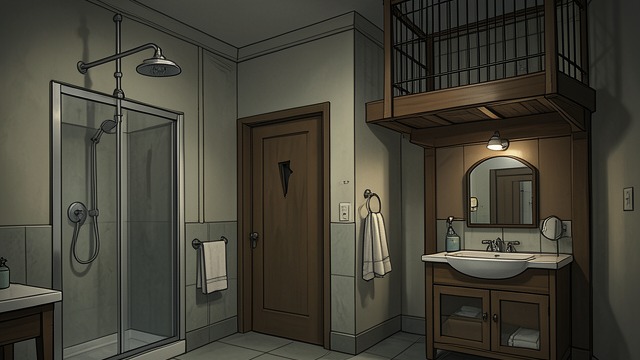
Police enter Ken Carlton’s home and find the concealed arrangements behind its ordinary rooms: a bathroom dedicated to the captives, a notched door, a hooked pole, and the loft cage.
The house’s familiar domestic features have been reorganized into a system for keeping women isolated and moving them under restraint. The violence has not taken place in a remote lair but within a residential neighborhood.
Safety Reinterpreted
The discovery undermines the comforting assumption that a home is safe simply because it appears ordinary. The police must treat domestic spaces as places where evidence, victims, and offenders may be concealed.
The Mother’s House
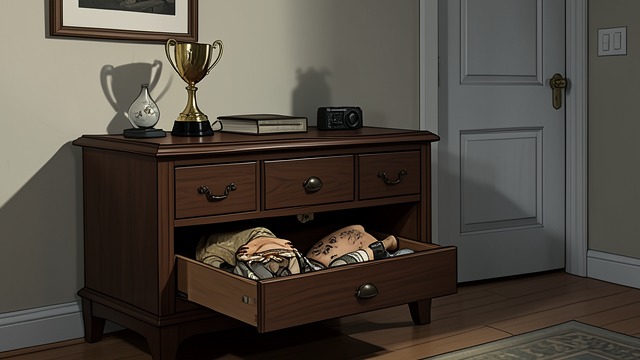
A Private Archive in a Family Home
A House Kept Closed
Keith Warner refuses to let Rachel enter or help clear his late mother’s house. His secrecy contributes to her suspicion, and the property holds a private collection hidden inside a sideboard.
Police find trophies taken from murdered women, including fingertips and Felicity’s tattoo. The preserved room presents an outwardly tidy domestic interior while concealing the killer’s archive.
The Ordinary Conceals the Extraordinary
Both Warner’s house and Carlton’s home expose the distance between a respectable exterior and private harm. Domestic spaces in the novel can shelter grief and companionship, but they can also hide possession, violence, and evidence.
Monday 19 February evening
Wednesday 21 February evening
Saturday 3 March morning
Saturday 3 March
Saturday 3 March
